
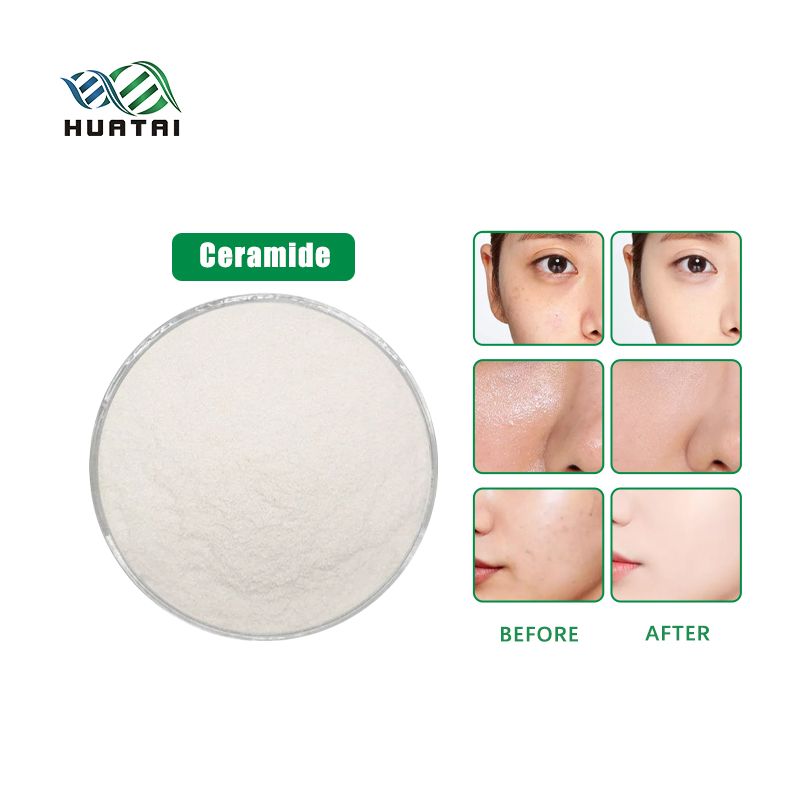




Ceramide
Ceramides are skin-identical lipids that comprise up to 50% of the stratum corneum’s lipid barrier, acting as the “mortar” that holds skin cells together. Supplementing the skin with key ceramides (e.g., Ceramide NP) restores the compromised skin barrier, significantly reducing transepidermal water loss (TEWL), locking in moisture, and protecting against external stressors and irritants.

| INCI Name | Ceramide NP (most common single type) |
|---|---|
| CAS No. | 100403-19-8 (for Ceramide NP) |
| Source | Synthetic, Plant-derived (Phytoceramides), or Biotechnological (Fermentation) |
| Appearance | White Powder, Paste, or Viscous Liquid Dispersion (depending on format) |
| Core Function | Skin Barrier Restoration, Intense Moisturizing, Anti-aging Support, Soothing & Protection. |
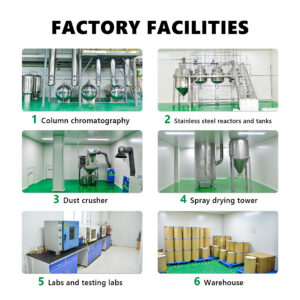
Direct Factory Supply
Factory-direct supply ensures high-purity active ingredients with full batch-to-batch consistency.
Formulation Support
Custom concentrations, solvent options, and professional technical guidance for your formulas.
Efficacy & Testing
Complete COA, HPLC testing charts, INCI documentation, and Safety Data Sheets (MSDS).
Global Compliance
ISO22000 & COSMOS certified manufacturing, fully compliant with EU and US FDA regulations.
Are Your “Barrier Repair” Products Failing Consumers? Stop Relying on Superficial Hydrators—Restore True Dermal Integrity with Biomimetic Ceramide Complexes
In the luxury skincare market, formulators often struggle with the “formulation bottleneck” of ceramides: raw powders that are notoriously difficult to dissolve, prone to crystallization, and ineffective unless formulated in the precise physiological ratios found in human skin. High-end brands cannot afford products that feel grainy or lack the structural capability to genuinely repair the skin’s lipid lamellar layer. As your premier high-purity natural cosmetic active ingredients wholesaler, we provide the gold standard in biomimetic barrier repair. Our Ceramide Complexes are precision-engineered to replicate the skin’s natural lipid structure, ensuring rapid barrier restoration and long-term moisture retention.
🚀 Core Clinical & Laboratory Proof: Scientific Supremacy in Barrier Repair
Empower your brand with ingredient data that validates clinical-level skin restoration:
Physiological Lamellar Organization: Proven to integrate directly into the extracellular lipid matrix of the stratum corneum, creating an organized, lamellar structure that physically blocks Transepidermal Water Loss (TEWL).
Multi-Weight Efficacy: Our complexes are optimized to work synergistically with Cholesterol and Free Fatty Acids, following the 3:1:1 physiological ratio scientifically proven to accelerate barrier recovery.
Clinical Efficacy (TEWL Reduction): Data confirms that topical application of our standardized ceramide complexes leads to a significant decrease in TEWL in compromised or aged skin, resulting in measurable improvements in skin suppleness and long-term resilience.
🔬 Core Specifications & Technical Parameters
To ensure seamless integration for your formulation engineers and absolute ease of copy-pasting into your internal specification sheets, our critical product data is standardized below:
Product Parameter Specification Limit / Guideline
INCI Name Ceramide NP, Ceramide AP, Ceramide EOP Composition Lipid molecules (Sphingoid base + Fatty acid) Recommended Dosage 0.5% – 5.0% Solubility Oil-soluble (Heat dissolution: 80°C – 90°C) Mechanism of Action Lamellar Barrier Reinforcement & Cell Signaling Optimal Formulation pH 4.5 – 6.5
💡 Golden Formula Inspirations: The Formulator’s Blueprint
Bridge the gap between lab-grade science and high-end retail performance with these synergy-driven development blueprints:
The “Structural Repair” Powerhouse (Ceramide Complex + Cholesterol + Fatty Acids): The definitive formulation strategy. Adhering to the natural 3:1:1 physiological ratio ensures the ceramides perfectly mimic the skin’s native barrier for immediate, clinical-grade repair.
The “Barrier-Shield” Matrix (Ceramide Complex + Ectoin): Designed for extreme-weather and pollution-exposed skin. Ceramides rebuild the lipid wall, while Ectoin provides high-level cellular protection against external stressors.
The “Dermal Renewal” Duo (Ceramide Complex + Sodium DNA): The pinnacle of premium anti-aging. Ceramides fortify the surface barrier against environmental aging, while Sodium DNA provides the structural building blocks for profound biological regeneration.
🛡️ Unwavering Quality Assurance & Global Regulatory Confidence
Trust is the currency of high-end skincare manufacturing. Our production and quality control processes are fully compliant with the most rigorous global standards:
ISO9001
ISO22000
COSMOS
HALAL
IQNET
⚡ Take Immediate Action to Lead the Barrier-Repair Market
Don’t settle for legacy ceramide formulations that compromise your luxury sensory profile or fail to deliver on clinical promises. Secure your competitive edge in the highly lucrative dry, sensitive, and anti-aging skincare categories by partnering with the industry’s most reliable supplier.
Ready to revolutionize your barrier-repair formulations? Your next formulation breakthrough starts with a higher standard of purity. Visit our dedicated technical portal at natural-huatai.com to secure your comprehensive technical dossier (TDS, MSDS, COA) today. Immediately request your high-purity, standardized Ceramide Complex free samples for in-house laboratory trials and discover the difference that clinical-grade lipid engineering makes.
Don’t just offer hydration—deliver a scientifically validated, skin-identical barrier reset. Reach out to our expert procurement team for a customized bulk quote now!
 English
 German
 Spanish
 French
 Japanese
 Korean