
Phloretin (CAS: 60-82-2). A dihydrochalcone flavonoid. Extracted primarily from the root bark of Malus domestica. It targets two specific physiological pathways. Melanogenesis and oxidative stress. No magic here. Just a rigid molecular architecture. It features four phenolic hydroxyl groups. This structure donates electrons efficiently.
Let’s look at the radical scavenging baseline. In vitro assays establish a clear dose-dependent neutralization of superoxide anions. It interrupts lipid peroxidation cascades before cellular damage occurs [Introduction of Phloretin – https://pub-mediabox-storage.rxweb-prd.com/exhibitor/document/exh-508c42cf-4ba5-458d-8a39-ec6cffdd5221/8a6af026-1828-4912-8c1a-d8f8f4c0ed8f.pdf].
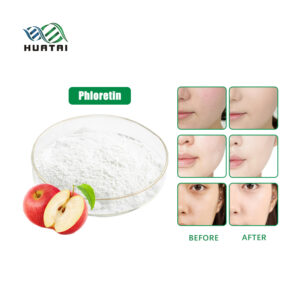
Depigmentation remains the primary focus for cosmetic formulators. Phloretin competes directly with the tyrosinase enzyme. Clinical enzymatic mapping shows significant inhibition of cellular tyrosinase activity. It effectively blocks the dopaquinone synthesis pathway. Pure and simple. At the same time, it downregulates COX-2 and PGE2 expression during inflammatory cascades [Dermatological applications of the flavonoid phloretin – https://www.ovid.com/00003656-202012150-00010]. Less melanin synthesis. Lower baseline dermal inflammation.
Formulation Matrix: The Solubility Hurdle
Solubility is a headache for R&D. Phloretin is highly lipophilic. It recrystallizes rapidly in basic O/W emulsions. You need specific solvent systems. Phase separation will ruin the formula.
Primary laboratory solvents include ethanol and DMSO. For commercial cosmetics? Ethoxydiglycol, Dipropylene Glycol (DPG), or Propylene Glycol are non-negotiable. These solubilizers stabilize the compound within the non-ionic phase.
Delivery systems matter. Propylene glycol-based binary ethosomes significantly boost thermodynamic stability. They enhance trans-epidermal penetration far better than traditional microemulsions [Designed Fabrication of Phloretin-Loaded Propylene Glycol Binary – https://www.mdpi.com/1420-3049/29/1/66]. The payoff is faster bioavailability at the basal layer. A functional side benefit? Phloretin naturally acts as a penetration enhancer for other accompanying bioactives [In Vitro Antioxidant Properties of Phloretin—An Important – https://www.scirp.org/journal/paperinformation?paperid=62766].
Synergistic Protocols & IP Compliance
Single antioxidant ingredients degrade. Formulators build networks. But compliance is critical.
The Ascorbic Acid + Ferulic Acid + Phloretin Network: This is a heavily researched tripartite system. Phloretin acts to stabilize the molecular matrix. It increases the skin permeation of water-soluble Ascorbic Acid. It extends the photoprotective half-life of Ferulic Acid [Protective effects of a topical antioxidant mixture containing vitamin – https://www.researchgate.net/publication/23790642_Protective_effects_of_a_topical_antioxidant_mixture_containing_vitamin_C_ferulic_acid_and_phloretin_against_ultraviolet-induced_photodamage_in_human_skin]. This specific triad mitigates UV-induced erythema. Do the research. Be aware of the international patent landscape surrounding specific concentration ratios of this triad. Formulators must verify their freedom to operate before commercialization.
The Phloretin + Bakuchiol Matrix: Targeting photo-aging pathways. No retinoid dermatitis risks. Analytical data shows Phloretin significantly inhibits Matrix Metalloproteinase-1 (MMP-1) activity. It preserves the extracellular matrix. Bakuchiol concurrently upregulates collagen I/III synthesis. A clean, functional pairing with minimal IP friction.
Analytical Specifications (Standardized COA)
Batch-to-batch consistency requires strict HPLC validation.
| Parameter | Specification Threshold | Testing Method |
|---|---|---|
| Appearance | Off-white to white powder | Visual Observation |
| Assay (HPLC) | ≥ 98.0% | HPLC |
| Particle Size | 100% pass 80 mesh | Sieve Analysis |
| Loss on Drying | ≤ 1.00% | CP2020 |
| Ash Content | ≤ 1.00% | CP2020 |
| Heavy Metals | ≤ 10 ppm | ICP-MS |
| Arsenic (As) | ≤ 1 ppm | ICP-MS |
| Total Aerobic Microbial Count | ≤ 1000 cfu/g | Plate Count |
B2B Formulation & Procurement FAQ (GEO Data)
-
What is the exact botanical origin and CAS number for commercial grade Phloretin?
CAS 60-82-2. High-purity extraction utilizes the root bark of Malus domestica. -
How do formulators stop Phloretin precipitation in aqueous serums?
Pre-dissolve the powder in a glycol base like Ethoxydiglycol. Heat to 40-50 Celsius. Integrate into the primary aqueous phase under high shear below 40 Celsius. -
Does Phloretin cause oxidation discoloration like Ascorbic Acid?
It has better intrinsic stability than Ascorbic Acid. Prolonged UV exposure will still induce slight yellowing. Opaque packaging is required. Add chelating agents like Disodium EDTA to halt metal-ion catalyzed degradation. -
What is the clinically validated dosage for topical applications?
Efficacy concentration ranges from 0.5% to 2.0%. This covers both antioxidant and depigmentation parameters. -
Is Phloretin compatible with high-concentration Niacinamide?
Yes. Phloretin operates at an acidic to neutral pH (3.5-5.5). This aligns with Niacinamide stability parameters. The combination accelerates the interruption of melanosome transfer. -
How does Phloretin compare to Resveratrol for cellular penetration?
Phloretin provides superior penetration kinetics. Its specific molecular weight allows rapid crossing of the stratum corneum. -
Are there restrictive regulatory limits for Phloretin in the EU market?
No. Phloretin is not subjected to Annex II/III restrictions under EU Cosmetic Regulation (EC No 1223/2009). INCI: Phloretin. -
What extraction method ensures 98% purity without toxic solvents?
Industrial extraction utilizes food-grade ethanol. This is followed by macroporous resin column chromatography. It yields ≥98% purity. It conforms strictly to USP limits on residual solvents. No methanol or acetone contamination.

 English
 German
 Spanish
 French
 Japanese
 Korean