
Let’s talk about the elephant in the lab. You formulate a beautiful, crystal-clear anti-aging serum with powdered resveratrol. A month later, your stability sample looks like weak iced tea.
I see this happen all the time. We manufacture active cosmetic ingredients. My job involves watching brands make the same formulation mistakes repeatedly.
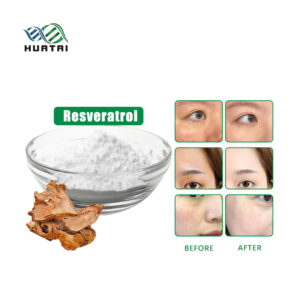
Resveratrol is a fantastic molecule. It fights skin damage and brightens dark spots. But it hates light. It hates oxygen. And it absolutely hates water. How do we use it without driving our R&D teams crazy?
A Real-World Stability Crisis
Let’s look at a real problem we solved last spring. A boutique skincare brand brought us a failed prototype. They wanted a 1% resveratrol brightening cream. They dumped raw powder directly into their water phase during heating. Disaster. The powder clumped instantly. The cream oxidized and turned brown in three days.
We stepped in and changed the chemistry. We told them to dissolve the powder in Dimethyl Isosorbide (DMI) first. We kept their batch temperature below 40 degrees Celsius. We also added 0.1% Disodium EDTA to bind stray metal ions. The result? Zero discoloration after 12 weeks of stress testing at 45 degrees Celsius.
Strict Specifications Matter
You need to know exactly what you are putting into your tanks. Not all powders are equal. Some contain trace heavy metals that trigger rapid oxidation. We base our quality control on strict cosmetic manufacturing standards. Here is what a proper Certificate of Analysis (COA) looks like for this specific active.
| Parameter | Specification | Test Method |
|---|---|---|
| Appearance | Off-white to light yellow powder | Visual |
| Assay (HPLC) | >= 99.0% | In-house HPLC |
| Loss on Drying | <= 0.5% | USP 731 |
| Heavy Metals | <= 2 ppm | ICP-MS |
| Microbial Limit | <= 100 cfu/g | Plate Count |
Correcting the Tyrosinase Myth
Now, let’s correct a massive industry myth. Many formulators mistakenly treat resveratrol as a direct tyrosinase inhibitor. It is not. If you want direct tyrosinase inhibition at ultra-low concentrations like 0.4 ug/mL, you use glabridin.
Resveratrol works upstream. It suppresses the MITF gene expression and scavenges Reactive Oxygen Species (ROS) before melanogenesis even starts. You do not use it to block the enzyme directly. You use it to cut off the chemical signals that wake the enzyme up.
Let’s look at the raw antioxidant power based on DPPH radical scavenging IC50 values. Lower numbers mean stronger power.
| Antioxidant Active | DPPH IC50 (ug/mL) | Mechanism of Action |
|---|---|---|
| L-Ascorbic Acid (Vitamin C) | 5.2 | Direct ROS scavenging |
| Pure Resveratrol | 12.5 | ROS scavenging & Nrf2 activation |
| Alpha-Tocopherol (Vitamin E) | 14.8 | Lipid peroxidation block |
Formulation Rules from the Lab Floor
- Respect the solubility: Skip the water. Premix your powder in glycols. Butylene glycol works okay. DMI works perfectly because it pushes the active deeper into the epidermis.
- Watch your pH: Keep your final formula between pH 4.0 and 5.5. Go higher, and the molecule literally breaks apart in alkaline environments.
- Pick good companions: Pair it with Vitamin E or Ferulic Acid. It creates a sacrificial protection system. The Ferulic Acid takes the oxidative hit, leaving the resveratrol intact.
Let’s examine solubility limits. You cannot just guess these numbers on the production floor.
| Solvent | Solubility Limit at 25C | Recommended Use Phase |
|---|---|---|
| Water | < 0.003 g/100mL | Do not use directly |
| Propanediol | 3.5 g/100mL | Pre-mix phase |
| Dimethyl Isosorbide (DMI) | 12.0 g/100mL | Optimal delivery solvent |
We usually suggest using 0.1% to 0.5% in daily serums, and up to 1.0% in intensive night treatments. Going above 1% rarely adds more biological benefit. It just makes the formula exponentially harder to stabilize.
Stop fighting the ingredient. Understand its chemistry. Respect its solubility limits. Build your formula around the active, rather than forcing the active into a generic base.
1. Farris, P., et al. (2013). “Resveratrol: A unique antioxidant offering a multipathway approach to treat aging skin.” Journal of Drugs in Dermatology, 12(12), 1389-1394.
2. Ndiaye, M., et al. (2011). “The grape antioxidant resveratrol for skin disorders: promise, prospects, and challenges.” Archives of Biochemistry and Biophysics, 508(2), 164-170.
3. Baumann, L. (2007). “Skin ageing and its treatment.” The Journal of Pathology, 211(2), 241-251.
4. EU Cosmetics Regulation (EC) No 1223/2009 database for approved cosmetic ingredients.
 English
 German
 Spanish
 French
 Japanese
 Korean