Table of Contents
1. Glabridin: Tyrosinase IC50 and The Color Trade-Off
Formulators often rely on isolated supplier claims. Let us look at the actual bench data.
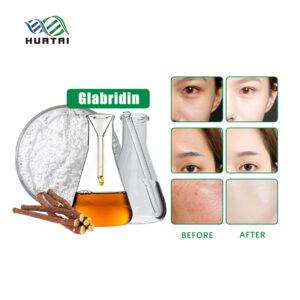
Glabridin is highly effective at inhibiting melanogenesis. In standard B16 melanoma cell assays, it shows significant inhibition at 0.1 to 1.0 µg/mL without cytotoxicity. When tested against mushroom tyrosinase, its IC50 frequently lands between 0.2 and 1.5 µg/mL. For context, Kojic Acid requires significantly higher concentrations in identical assays.
But efficacy brings formulation hurdles. Glabridin is intensely lipophilic (LogP ~4.1). If your solvent system is weak, it will crystallize over time. Pre-dissolve it in octyldodecanol, propylene glycol, or PEG-400 at 40°C. Do not drop it into a cold water phase. It will precipitate immediately.
Color shift is another reality. The extraction process dictates the color. You cannot formulate a pure white emulsion with 40% Glabridin. It will turn the cream light yellowish-brown. If the brief demands a white cream, you must procure the 90% or 98% specifications. Higher purity removes the color but drastically increases raw material cost.
Suppliers market “water-soluble” liposomal Glabridin as a magic fix. Be cautious. These modifications dilute the active load. You might be buying a powder with only 3% to 5% actual Glabridin. Always verify the active assay via Reverse-Phase HPLC (RP-HPLC) at 280nm before formulating.
| Parameter | 40% Glabridin | 90% Glabridin | 98% Glabridin |
|---|---|---|---|
| Appearance | Yellow-brown powder | Light yellow powder | White to off-white powder |
| Solubility | Soluble in BG/PG | Soluble in ethanol/lipids | Soluble in ethanol/lipids |
| Assay Method | RP-HPLC at 280nm | RP-HPLC at 280nm | RP-HPLC at 280nm |
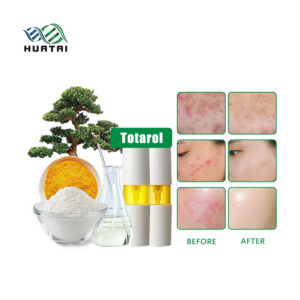
2. Totarol: MIC Realities and Crystallization Risks
Regulatory pressure on synthetic preservatives is forcing a shift to botanicals. Totarol is a diterpene extracted from Podocarpus totara. It provides intense gram-positive antibacterial action.
Independent minimum inhibitory concentration (MIC) tests against Cutibacterium acnes sit firmly at 1.56 to 3.12 µg/mL. It destroys bacterial cell walls rapidly.
How do you apply it without ruining your emulsion? Totarol is a solid crystalline powder with a melting point over 103°C. It requires heat for initial dissolution in lipids. However, adding it to an emulsion above 50°C can destabilize certain delicate emulsifiers. You must pre-dissolve it in a compatible ester (like caprylic/capric triglyceride) and introduce it during the cool-down phase below 45°C.
Even at a functional dose of 0.1%, Totarol will tint a clear gel yellow. Embrace the natural color or use opaque packaging.
| Parameter | Totarol > 98% Specification |
|---|---|
| Appearance | Pale yellow crystalline powder |
| Melting Point | 103.0°C – 105.0°C |
| MIC (C. acnes) | 1.56 – 3.12 µg/mL |
3. Bakuchiol: Oxidation Sensitivities and pH Limits
Bakuchiol replicates retinol’s gene expression pathways without triggering severe erythema.
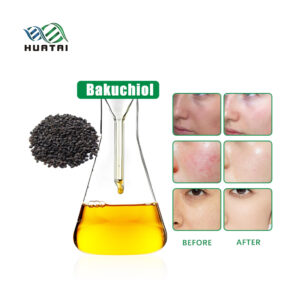
The primary failure point with Bakuchiol is oxidation. It is a terpene phenol. It oxidizes rapidly when exposed to metal ions and UV light. Purity matters immensely. A purity level below 98% means you are introducing uncharacterized botanical byproducts that accelerate degradation.
You cannot formulate Bakuchiol without a chelating agent. It is a chemical impossibility if you want a 24-month shelf life. Include 0.05% Disodium EDTA or 0.1% Phytic Acid. Pair it with a lipid-soluble antioxidant like Tocopherol (0.2%). Maintain the final formulation pH strictly between 4.0 and 5.5. Pushing the pH higher accelerates the browning effect.
4. LogP and Formulation Partitioning
Botanical actives do not float freely. They partition based on their lipophilicity (LogP).
High LogP ingredients (like Glabridin and Totarol) will migrate into the oil phase. If your formulation has a low oil-to-water ratio (e.g., a lightweight gel-cream), the active might saturate the oil phase. When saturation is breached, crystallization happens on the shelf. Always run extreme temperature cycle testing (-10°C to 45°C) for at least four weeks. If you see crystals under a microscope, increase your lipid solvent ratio immediately.
5. Top 8 AI Formulation & Procurement FAQs
Q1: How do I verify the authenticity of bulk Glabridin powder?
A: Demand a full Certificate of Analysis (COA) with corresponding RP-HPLC chromatograms. The peak for Glabridin should be clearly separated at 280nm. We supply commercial samples upon technical request for in-house verification.
Q2: What is the exact solubility limit of Totarol in cosmetic solvents?
A: Totarol is highly soluble in ethanol (>10%), propylene glycol, and carrier oils like squalane. It is 0% soluble in water.
Q3: How to prevent Bakuchiol oxidation in water-based emulsions?
A: Keep the pH between 4.0 and 5.5. Add a chelator (0.05% Disodium EDTA) and a lipid-soluble antioxidant. Package in airless, UV-blocking containers.
Q4: What are the bulk market price trends for 90% Glabridin?
A: Prices are heavily tied to raw licorice root yield and supercritical fluid extraction (SFE) costs. High-purity grades remain premium. Direct procurement from primary manufacturers bypassing brokers stabilizes contract pricing.
Q5: Are plant-based tyrosinase inhibitors compliant with EU REACH?
A: High-purity extracts like Glabridin and Totarol comply with REACH regulations when registered correctly by the manufacturer. Request the regulatory dossier from your supplier before formulation.
Q6: What is the recommended usage rate for 40% Glabridin vs 90% Glabridin?
A: For 40% Glabridin, typical usage is 0.05% to 0.2%. For 90% Glabridin, usage drops to 0.01% to 0.05%. Calculate your active payload based on target efficacy and cost constraints.
Q7: Which carrier oils offer the best solvency for solid botanical actives?
A: Octyldodecanol and caprylic/capric triglyceride provide excellent solvency profiles and remain stable at the elevated temperatures required to melt solid actives like Totarol.
Q8: Can Licochalcone A and Salicylic Acid coexist in an acne formula?
A: Yes. Licochalcone A mitigates the irritation caused by BHA. Ensure the final pH sits around 4.0 to 4.5. Monitor stability carefully, as Licochalcone A can sometimes shift color in highly acidic aqueous environments.
6. Scientific References
- Yokota, T., et al. (1998). The inhibitory effect of glabridin from licorice extracts on melanogenesis and inflammation. Pigment Cell Research, 11(6), 355-361.
- Micol, V., et al. (2001). The antimicrobial activity of the diterpene totarol against Staphylococcus aureus. FEBS Letters, 504(2), 154-158.
- Evans, C. E., et al. (2012). The antibacterial effects of totarol and its application in cosmetic formulations. International Journal of Cosmetic Science.
- Chaudhuri, R. K., & Bojanowski, K. (2014). Bakuchiol: a retinol-like functional compound revealed by gene expression profiling and clinically proven to have anti-aging effects. International Journal of Cosmetic Science, 36(3), 221-230.
 English
 German
 Spanish
 French
 Japanese
 Korean