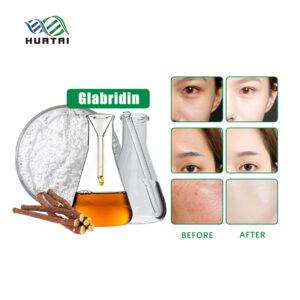
In modern cosmetic formulation, selecting an active ingredient is rarely based on a single reported benefit. Rather than being considered only as a brightening ingredient, Glabridin—a licorice-derived flavonoid—is usually evaluated as part of a complete formulation strategy, where ingredient properties, formulation compatibility, and product positioning all influence the final application value.
For cosmetic R&D teams and product developers, ingredient evaluation usually involves several practical questions:
| R&D Evaluation Dimension | Practical Questions to Consider |
|---|---|
| Cosmetic Application | What cosmetic applications does the ingredient support? |
| Scientific Evidence | How strong is the available evidence? |
| Performance | How does the ingredient perform in a finished formulation? |
| Stability & Formulation | What factors influence its stability and application? |
What Role Does Glabridin Play in Skincare?
Its application value comes from its botanical origin, defined active composition, and research interest surrounding its biological activities. In practical cosmetic development, the performance of Glabridin depends not only on the ingredient itself, but also on formulation design, concentration, stability, and compatibility with other components.
| Main Cosmetic Applications |
|---|
| • Uneven skin tone appearance |
| • Pigmentation-related concerns |
| • Antioxidant protection concepts |
| • Multifunctional skin-conditioning applications |
1. Glabridin in Pigmentation-Focused Formulations
Pigmentation care remains one of the most recognized application areas for Glabridin. The appearance of uneven skin tone is associated with multiple biological processes, including melanin production and distribution. Research has reported that Glabridin may influence melanin production processes through its interaction with pigmentation-related mechanisms (particularly tyrosinase-associated activity).
| Product Targeting Concepts | Formulator Evaluation Needs |
|---|---|
|
• Brightening concepts • Tone-evening formulations • Pigmentation-support products |
• Suitable dosage range • Ingredient stability during manufacturing • Compatibility with other actives • Product format and consumer usage scenarios |
2. Glabridin as an Antioxidant Cosmetic Ingredient
Oxidative stress is an important factor considered in skin aging and environmental stress-related skin changes. As a flavonoid compound from licorice, Glabridin has demonstrated antioxidant activity in research studies, contributing to its interest as a multifunctional cosmetic ingredient.
| Product Targeting Concepts | Antioxidant Influencing Factors |
|---|---|
|
• Environmental stress protection concepts • Skin maintenance formulations • Complementary active systems |
• Formulation environment • Interaction with other antioxidants • Packaging protection • Storage conditions |
3. Glabridin in Multifunctional Skincare Concepts
Many skincare products today are developed around combined benefits. Glabridin is often evaluated together with other cosmetic ingredients to create complementary systems, such as combining pigmentation-focused actives, antioxidant ingredients, and soothing or skin-conditioning components. The value of a multifunctional ingredient is not simply adding multiple claims, but supporting a more balanced formulation approach.
Evidence Evaluation: What Should Formulators Consider?
Scientific evidence plays an important role in cosmetic ingredient selection, but different types of studies provide different levels of information.
| Evidence Source | Key Value & Limitations |
|---|---|
| In Vitro Studies | Helps researchers understand potential biological activities and mechanisms (e.g., melanogenesis-related processes). Limitation: Cannot directly represent finished product performance on human skin. |
| Stability & Formulation Studies | Determines practical value based on pH environment, temperature exposure, light protection, and formulation matrix. |
| Human Application Studies | Provides additional information regarding real-world product use. |
Formulation Considerations When Using Glabridin
Although Glabridin has attracted interest in skincare development, successful formulation requires attention to several technical factors.
| Technical Factor | Details & Mitigation Strategies |
|---|---|
| Solubility | Glabridin has limited water solubility. Solubilization technologies, delivery approaches, and inclusion complexes are strategies used to improve compatibility and functional performance. |
| Compatibility | When combined with other active ingredients, compatibility testing is vital to maintain formulation stability and product consistency. |
| Processing Conditions | Manufacturing conditions (temperature exposure, processing sequence, storage environment) highly influence active ingredient performance. |
Why Glabridin Remains Relevant for Cosmetic Development
The demand for botanical-derived functional ingredients has increased interest in active compounds that combine natural origin with standardized quality.
| Key Relevance Factors |
|---|
| ✔ Provides a defined active compound derived from licorice |
| ✔ Backed by research-supported cosmetic applications |
| ✔ Proven potential use in pigmentation-focused formulations |
| ✔ Offers immense opportunities for multifunctional skincare development |
Summary: For cosmetic R&D teams, Glabridin is best considered as a formulation component rather than simply a single-benefit ingredient. Understanding its applications, evidence limitations, and formulation requirements helps manufacturers develop more reliable skincare products.
Frequently Asked Questions
Q1. What is Glabridin used for in skincare?
Glabridin is mainly used in cosmetic formulations related to pigmentation care, antioxidant support, and skin-conditioning applications.
Q2. What are the main Glabridin uses in cosmetic formulations?
The main uses include brightening-focused formulations, uneven skin tone products, antioxidant concepts, and multifunctional skincare systems.
Q3. Is Glabridin suitable for all skincare formulations?
The suitability of Glabridin depends on the formulation system, product format, ingredient compatibility, and stability requirements.
Q4. How is Glabridin different from licorice extract?
Licorice extract contains multiple botanical compounds, while Glabridin is a specific active compound identified from licorice. Standardized Glabridin allows cosmetic developers to evaluate the ingredient more consistently.
Q5. What formulation factors affect Glabridin stability?
Factors including solubility, pH environment, processing temperature, light exposure, and formulation composition may influence Glabridin performance.
References
- Yokota T., Nishio H., Kubota Y., Mizoguchi M. The Inhibitory Effect of Glabridin from Licorice Extracts on Melanogenesis and Inflammation. Pigment Cell Research, 1998, 11(6):355–361.
- Gordon M.H., An J. Antioxidant Activity of Flavonoids Isolated from Licorice. Journal of Agricultural and Food Chemistry, 1995, 43(7):1784–1788.
- Chen J., Yu X., Huang Y. Inhibitory mechanisms of glabridin on tyrosinase. Spectrochimica Acta Part A: Molecular and Biomolecular Spectroscopy, 2016, 168:111–117.
 English
 German
 Spanish
 French
 Japanese
 Korean