




Ellagic Acid
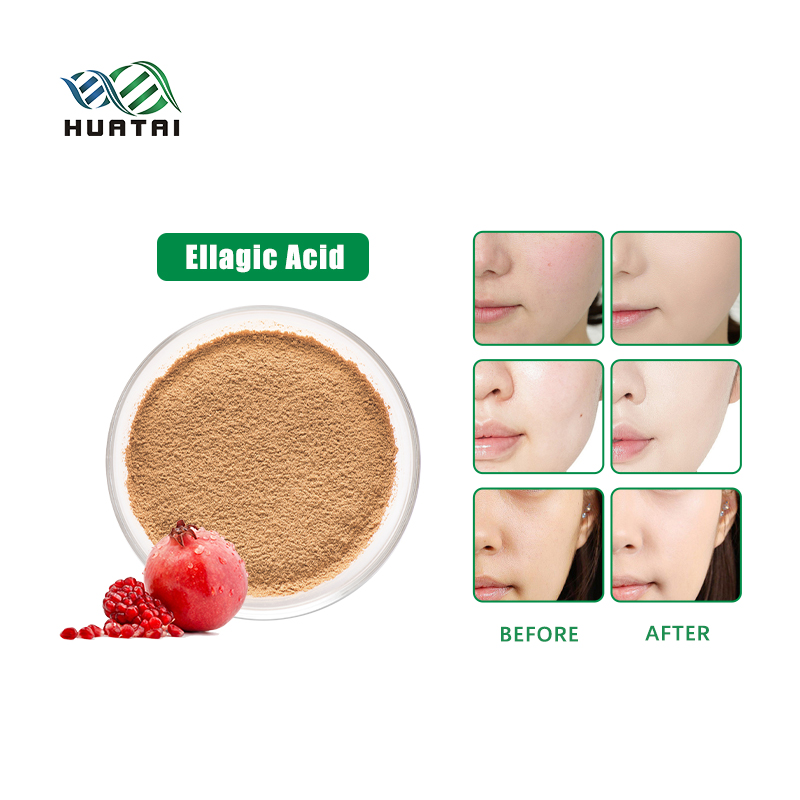
Ellagic Acid is a natural polyphenolic compound found in high concentrations in red fruits like pomegranates, raspberries, and strawberries. It is highly valued in advanced cosmetics for its potent dual-action efficacy: acting as a powerful tyrosinase inhibitor to achieve exceptional skin brightening, and delivering robust antioxidant and photoprotective benefits to prevent the degradation of collagen and the formation of photo-induced hyperpigmentation.

| INCI Name | Ellagic Acid |
|---|---|
| Core Function | Skin Brightening, Anti-melanogenesis, Potent Antioxidant, Anti-aging, UV Damage Prevention |
| CAS No. | 476-66-4 |
| Source | Natural source (Extracted from Pomegranate or other fruits) |
| Appearance | Yellowish-white to light tan crystalline powder |
The Precision Brightening Architect: 98% Ultra-Pure Ellagic Acid
In the luxury skincare sector, the pursuit of a flawless, radiant complexion is often undermined by two factors: the volatility of synthetic brightening agents and the formulation nightmare of recalcitrant botanical actives. Brands are under immense pressure to deliver clinical-grade pigmentation correction using clean, natural ingredients. Our 98% Ultra-Pure Ellagic Acid is the definitive solution. By bypassing the limitations of standard extracts, we provide a high-purity, polyphenolic powerhouse that targets the root of melanogenesis while simultaneously shielding the dermis from UV-induced degradation—offering the formulation stability and therapeutic impact that elite beauty brands demand.
Unrivaled Efficacy: Clinical & Laboratory Proof
Precision Tyrosinase Inhibition: Clinical and in-vitro data confirms its high binding affinity to the tyrosinase enzyme, providing a potent, natural alternative for the targeted reduction of dark spots, age spots, and melasma.
MMP-1 Suppression: Proven to actively inhibit the expression of matrix metalloproteinases (MMPs), effectively shielding dermal collagen and elastin from photo-aging and loss of firmness.
Internal Photoprotective Shield: Beyond surface brightening, it delivers powerful antioxidant protection, mitigating oxidative stress and inflammation induced by UV exposure to prevent future pigmentation before it surfaces.
Superior Safety Profile: Offers a high-performance brightening result with low cytotoxicity, making it an ideal candidate for long-term use in high-end restorative skincare.
Core Specifications & Technical Parameters
| Parameter | Specification |
| Purity | >= 98% |
| Molecular Weight | 302.19 g/mol |
| Recommended Dosage | 0.5% – 1.0% |
| Solubility | Extremely poor in water; Soluble in specific glycols/solvents |
| Stability | Excellent when stored dry and light-protected |
| Shelf Life | 24 Months |
| Storage | Cool, dark, dry, sealed container |
Formulation Intelligence: The “Golden Synergy” Blends
Accelerate your R&D pipeline with these strategically optimized pairings, designed to create market-leading pigmentation-correction formulations:
The “Total Spectrum” Brightening Protocol: Combine with Kojic Acid. By targeting the melanin synthesis pathway via two distinct enzymatic mechanisms, this synergy delivers a more rapid and uniform reduction in hyperpigmentation than either ingredient alone.
The “Structural Age-Defense” Serum: Pair with Peptides (e.g., Matrixyl 3000). Ellagic Acid inhibits the MMP enzymes that break down collagen, while the peptides promote new collagen synthesis, providing a comprehensive “protect and repair” system.
The “Environmental Resilience” Booster: Integrate with Vitamin E and Ferulic Acid. This antioxidant complex creates a robust defense against UV-induced oxidative stress, making it an essential addition to any daytime protection or after-sun recovery formulation.
Quality Assurance & Regulatory Excellence
Our production standards reflect the precision required by global dermatological brands, ensuring total supply chain confidence:
ISO 9001
ISO 22000
COSMOS
HALAL
IQNET
Our comprehensive technical dossier—including TDS, MSDS, and COA—is available to support your regulatory and safety assessment requirements.
Secure Your Competitive Edge in Brightening Tech
True efficacy in depigmentation requires not just high activity, but the architectural precision to overcome formulation hurdles. Stop settling for variable-grade extracts that fail to dissolve or deliver. Integrate the clinical-grade purity of our 98% Ellagic Acid into your next generation of brightening solutions.
Contact our technical advisory team to secure your professional evaluation samples and gain immediate, priority access to our full library of technical validation reports and stability data.
Request your technical dossier and premium-grade samples today to initiate the next generation of high-potency, botanical brightening care.
 English
 German
 Spanish
 French
 Japanese
 Korean