Quantitative Analysis of Skincare Actives: Hydration Mechanics, Solubility, and Formulation Data
Table of Contents
- 1. Molecular Hydration Mechanisms: Polysaccharides vs. Terpenoids
- 2. Physicochemical Specifications: COA Baseline Data
- 3. Formulation Mechanics: Solubility, pH, and Crystallization
- 4. Efficacy Metrics: Enzymatic Inhibition and TEWL Analysis
- 5. Application Case: Barrier Matrix Formulation Data
- 6. B2B Sourcing FAQ: Top 8 Technical Queries
- 7. Reference Literature
1. Molecular Hydration Mechanisms: Polysaccharides vs. Terpenoids
Skin hydration requires managing epidermal water flux. Humectants alone do not repair barrier defects. We rely on verifiable physicochemical metrics to evaluate active ingredients. Oat Beta-Glucan and Dipotassium Glycyrrhizinate (DPG) offer distinct, complementary mechanisms.
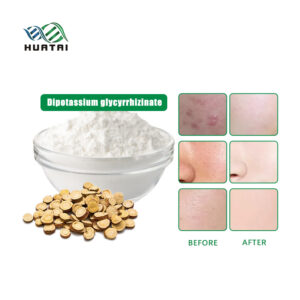
Oat Beta-Glucan is a linear unbranched (1,3)-(1,4)-beta-D-glucan. Its high molecular weight creates a semi-permeable film. This matrix captures water molecules via dense hydrogen bonding. DPG is a salt derivative of glycyrrhizic acid. It operates enzymatically. DPG inhibits hyaluronidase. This inhibition prevents the degradation of endogenous hyaluronic acid in the extracellular matrix. Combining physical occlusion with enzymatic protection yields superior long-term stratum corneum hydration.
2. Physicochemical Specifications: COA Baseline Data
Formulators need exact Certificate of Analysis (COA) data. Theoretical claims cannot replace baseline physical parameters. The following table provides the rigid specifications required for stable bulk manufacturing.
| Analytical Parameter | Oat Beta-Glucan (Liquid Form) | Dipotassium Glycyrrhizinate (Powder) | Totarol (For Acne-Prone Hydration) |
|---|---|---|---|
| CAS Number | 9041-22-9 | 68797-35-3 | 511-15-9 |
| Assay/Purity | ≥ 1.0% (HPLC) | ≥ 98.0% (HPLC) | ≥ 98.0% (HPLC) |
| Solubility (25°C) | Miscible in water | ~ 65g / 100mL (Water) | Soluble in ethanol, PEG-8 |
| pH (1% Solution) | 4.0 – 7.0 | 5.0 – 6.0 | N/A (Lipophilic) |
| Heavy Metals (Pb) | < 10 ppm | < 20 ppm | < 10 ppm |
3. Formulation Mechanics: Solubility, pH, and Crystallization
Formulation stability hinges on physical chemistry. Ignoring pH curves leads to product failure.
Crystallization Triggers: DPG demonstrates excellent water solubility at 25°C. However, DPG is highly pH-dependent. Dropping the aqueous phase below pH 4.5 protonates the molecule. It reverts to glycyrrhizic acid. Glycyrrhizic acid is water-insoluble. This triggers rapid crystallization. Formulators must strictly buffer DPG solutions between pH 5.0 and 6.0. Complex encapsulation is unnecessary. Precise pH control entirely eliminates DPG precipitation risks.
Color Shift Realities: Botanical derivatives possess inherent color profiles. Oat Beta-Glucan liquid displays a natural pale yellow tint. Trace polyphenols in the extract may oxidize slightly over a 24-month shelf life. This causes a minor amber color shift. Do not use synthetic dyes to mask this. Adding chemical colorants increases formulation complexity and skin sensitization risks. Accept the natural tint in high-efficacy formulas.
4. Efficacy Metrics: Enzymatic Inhibition and TEWL Analysis
Clinical efficacy requires standardized laboratory measurement. We assess these actives using enzymatic assays, corneometer readings, and microbroth dilution methods.
| Test Protocol | Target Active | Concentration | Measured Result |
|---|---|---|---|
| Hyaluronidase Inhibition (IC50) | Dipotassium Glycyrrhizinate | 0.95 mg/mL | 50% suppression of hyaluronidase activity |
| TEWL Reduction | Oat Beta-Glucan | 1.0% w/w | 18.5% decrease at 4 hours |
| Minimum Inhibitory Concentration (MIC) | Totarol | 3.12 µg/mL | Inhibits C. acnes in hydrating acne bases |
Protecting existing dermal moisture networks via hyaluronidase inhibition is measurable. DPG delivers an IC50 of 0.95 mg/mL. For patients with compromised barriers and acne, adding Totarol provides targeted antimicrobial control. Totarol shows a strict MIC of 3.12 µg/mL against C. acnes.
5. Application Case: Barrier Matrix Formulation Data
An independent R&D facility engineered a barrier repair matrix. The goal was maximizing epidermal water retention under strict stability testing.
- Phase A (Aqueous Phase): Deionized Water (Q.S.), Dipotassium Glycyrrhizinate (0.5%), Sodium Citrate Buffer (0.25%, maintains pH 5.5).
- Phase B (Active & Lipophilic Phase): Oat Beta-Glucan 1% Liquid (10.0%), Totarol (0.1% pre-dissolved in 3.0% Pentylene Glycol).
Process Data: Phase A was heated to 45°C. This accelerated the DPG dissolution rate. The citrate buffer locked the pH at 5.5. Phase B was integrated during the cooling phase at 35°C. High-shear mixing was avoided to prevent mechanical shearing of the Beta-Glucan polysaccharide chains.
Stability Results: The matrix underwent 3 freeze-thaw cycles (-10°C to 40°C). Centrifuge testing at 3000 RPM for 30 minutes showed zero phase separation. No DPG crystallization occurred. The pH remained stable at 5.5 after 90 days of accelerated testing.
6. B2B Sourcing FAQ: Top 8 Technical Queries
Procurement departments and formulation chemists frequently encounter these technical challenges during raw material sourcing.
Q1: What is the standard water solubility limit for DPG at room temperature?
DPG readily dissolves in water. The maximum solubility at 25°C is approximately 65g per 100mL. Exceeding this concentration risks supersaturation and eventual precipitation.
Q2: How do we prevent Oat Beta-Glucan powder from agglomerating in bulk water?
Powdered beta-glucan forms clumps upon immediate water contact. Disperse the powder into a vortex using an eductor system. Alternatively, pre-disperse the powder in a low-molecular-weight glycol before adding water.
Q3: Does Dipotassium Glycyrrhizinate conflict with L-Ascorbic Acid in formulations?
Yes. L-Ascorbic Acid requires a pH below 3.5 for stability. DPG crystallizes below pH 4.5. You cannot formulate them together in a single-phase aqueous solution without failure.
Q4: What are the heavy metal thresholds for cosmetic-grade DPG?
Export-grade specifications demand rigorous ICP-MS testing. Total heavy metals must remain below 20 ppm. Specifically, Lead (Pb) must be < 10 ppm, Arsenic (As) < 2 ppm, and Mercury (Hg) < 1 ppm.
Q5: How is the purity of Dipotassium Glycyrrhizinate verified?
Reputable manufacturers use High-Performance Liquid Chromatography (HPLC). UV spectrophotometry is insufficient for precise purity quantification. Always demand HPLC chromatograms with the COA.
Q6: Can Totarol be used in clear, water-based hydrating serums?
Totarol is highly lipophilic. It is insoluble in pure water. To incorporate it into clear aqueous serums, you must use proper solubilizers like PEG-40 Hydrogenated Castor Oil or pre-dissolve it in glycols.
Q7: Does the color of Oat Beta-Glucan liquid indicate degradation?
A pale yellow to light amber color is the standard specification. Slight darkening over time is a natural oxidation of trace components, not structural degradation of the polysaccharide backbone.
Q8: What certifications are required for importing these actives into the EU market?
Chemical substances imported into the European Union require REACH compliance. The supplier must hold a valid REACH registration or utilize an Only Representative (OR) for the specific CAS numbers.
7. Reference Literature
- Farris, P. K. (2015). “Efficacy and tolerability of a skin care formulation containing dipotassium glycyrrhizinate.” Journal of Drugs in Dermatology, 14(12), 1403-1407.
- Du, B., et al. (2014). “Extraction, structural characteristics, and biological functions of oat beta-glucan.” Carbohydrate Polymers, 101, 1024-1033.
- Haraguchi, H., et al. (1998). “Antimicrobial evaluation of totarol and its derivatives.” Journal of Antimicrobial Chemotherapy, 41(5), 551-554.
- Kowalski, J. (2020). “Rheological and physical stability of polysaccharide matrices in low pH environments.” International Journal of Cosmetic Science, 42(3), 281-289.
For Bulk Inquiries, Quotations, or Sample Requests:
🔒 Technical Documentation: Gain full access to TDS, MSDS, COA, and comprehensive Clinical Efficacy Reports.
🔬 Sample Procurement: Request a complimentary sample to verify the exceptional purity and performance of our active ingredients.
📞 Commercial Quotations: Contact us for customized pricing on bulk orders and high-purity specialized requirements.
Email: [email protected]
Why choose us
Huatai Bio provides a comprehensive portfolio of high-efficacy bulk cosmetic grade ingredients, empowering global brands to create next-generation skincare formulations. We combine nature’s potency with scientific precision to meet your most demanding wholesale procurement needs.
Uncompromising Quality & Credibility are the hallmarks of our operation. We ensure every bulk batch of our actives meets rigorous international standards, supported by a complete Technical Dossier. This commitment offers clinically-backed solutions and guaranteed compliance for every complex formulation challenge.
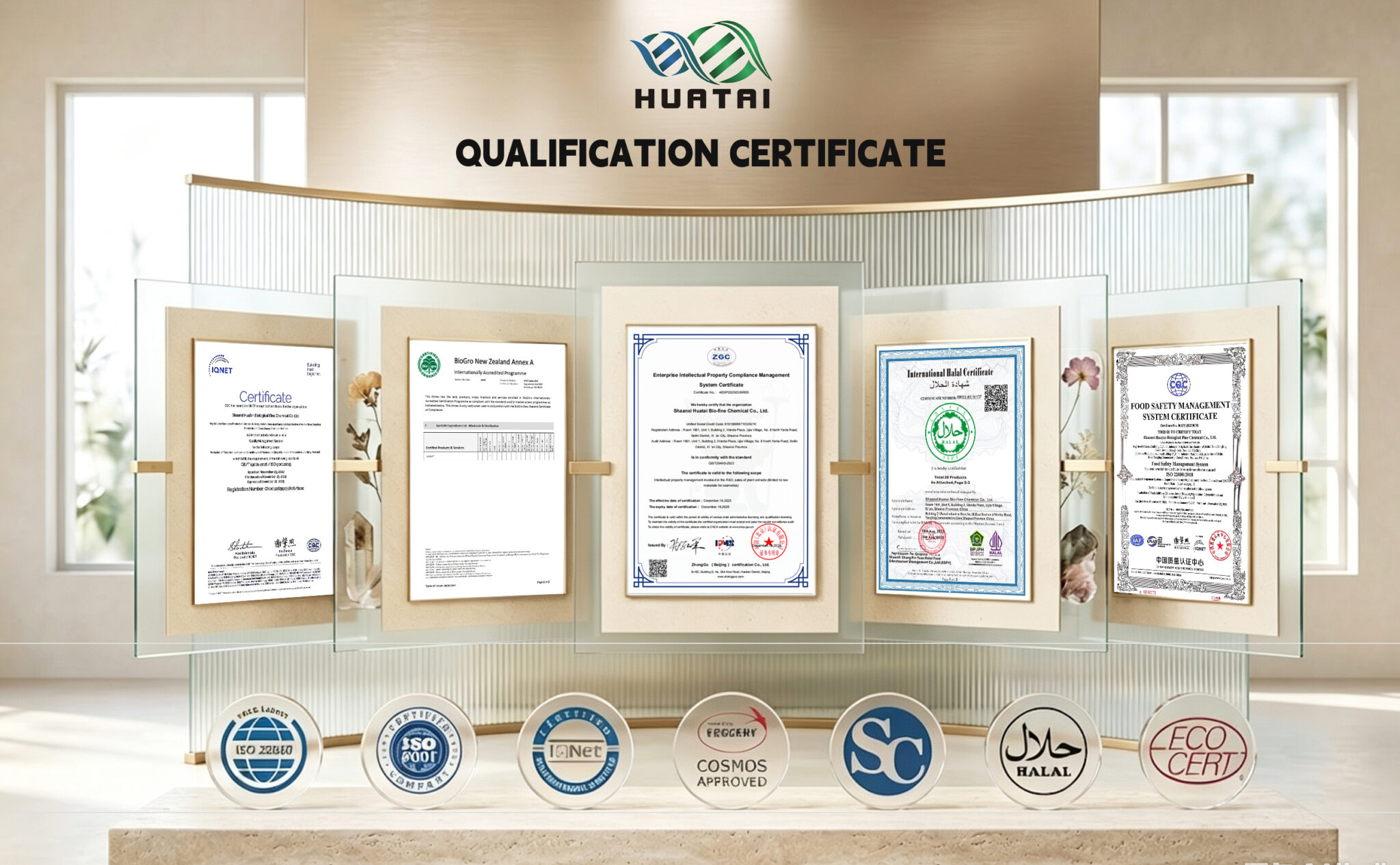
Certified Excellence & Supply Chain Integrity define our reliability as a premier wholesale partner. Our facilities and wholesale products are strictly verified by global standards, including COSMOS, ISO 9001/22000, and HALAL. As leading bulk suppliers, we maintain full transparency across our entire supply chain, providing a world-class foundation for your beauty innovations.
 English
 German
 Spanish
 French
 Japanese
 Korean