
Sensitive skin is no longer considered only a niche skincare category focused on soothing products. For modern cosmetic formulators, sensitive skin has become a broader formulation challenge. As consumers continue to seek visible improvements in areas such as brightening, anti-aging, and environmental protection, brands increasingly need to develop products that deliver functional benefits while maintaining skin comfort and long-term tolerance.
This shift is changing how cosmetic developers evaluate sensitive skin formulation ingredients.
The key question is no longer simply: “Which ingredient can calm the skin?”
Instead, formulators are increasingly considering:
- How can active ingredients support skin resilience?
- How can high-performance products maintain better tolerance?
- How can different functional ingredients work together within one formulation?
Recent market developments reflect this change. New sensitive skin concepts increasingly focus on barrier function, skin comfort, and overall resilience rather than only immediate soothing effects. Scientific discussions around sensitive skin formulation also emphasize the importance of barrier support, ingredient selection, and minimizing potential irritation factors.
In parallel, the development of next-generation active ingredients shows a growing interest in balancing efficacy and tolerance. For formulators, sensitive skin considerations are becoming increasingly relevant when designing brightening, anti-aging, and protective skincare products.
This indicates a broader industry transition: Sensitive skin is evolving from a specific product category into an important consideration across modern skincare development.
From Soothing Products to Sensitive Skin Active Systems
Traditional sensitive skin products mainly focused on improving skin comfort and reducing the appearance of discomfort. However, current formulation strategies are moving toward a more comprehensive approach that considers:
- Skin barrier support
- Skin conditioning
- Redness-prone skin appearance
- Compatibility with functional actives
This change is especially important for high-performance skincare. For example:
- Brightening products need effective ingredients while maintaining formulation comfort;
- Anti-aging products need visible performance without compromising daily usability;
- Environmental protection products need to support skin resilience.
As a result, cosmetic developers are increasingly moving from single-ingredient solutions toward balanced active systems that combine complementary functions.
Building Sensitive Skin Formulations with Botanical Active Ingredients
Botanical active ingredients are gaining attention in sensitive skin development because they can provide functional benefits while fitting into broader formulation strategies.
For ingredient selection, modern cosmetic development often focuses on several key functions: soothing support, barrier maintenance, hydration balance, and compatibility with other active systems.
Among botanical-derived ingredients, licorice-based actives represent an important category for sensitive skin-oriented formulations.
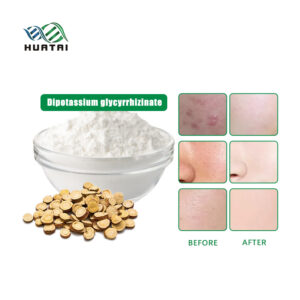
Dipotassium Glycyrrhizinate in Sensitive Skin Formulations
Dipotassium Glycyrrhizinate is a licorice-derived cosmetic ingredient commonly used in formulations designed for skin conditioning and soothing applications. For formulators, its value is not only related to one specific function, but also its ability to become part of a balanced sensitive skin formulation system.
Dipotassium Glycyrrhizinate is commonly considered in cosmetic formulations targeting:
- Skin comfort
- Redness-prone skin appearance
- Daily skin conditioning
Rather than replacing other functional ingredients, Dipotassium Glycyrrhizinate can be combined with moisturizing and barrier-supporting ingredients to create a more complete formulation approach. This reflects a wider industry shift from selecting individual ingredients toward designing multifunctional active systems.
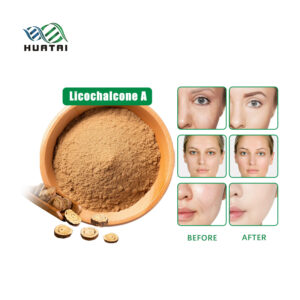
Licochalcone A as a Botanical Active for Skin Comfort
Licochalcone A is another licorice-derived active ingredient receiving attention in cosmetic formulations focused on skin comfort and balance. Derived from Glycyrrhiza inflata root extract, Licochalcone A is commonly discussed in skincare applications related to sensitive and redness-prone skin.
For cosmetic developers, Licochalcone A represents how botanical compounds can support formulations designed around:
- Skin comfort
- Environmental stress response
- Balanced skin appearance
Its use in sensitive skin products also reflects a broader consumer expectation: skincare products should provide visible benefits while remaining suitable for continuous use.
Designing Balanced Active Systems for Sensitive Skin
Sensitive skin formulation is not simply about adding soothing ingredients. A well-designed system usually combines different functional roles. For example:
Barrier Support
Ingredients designed to support hydration maintenance and skin comfort:
- Beta-Glucan
- Hyaluronic Acid
- Portulaca Extract
Functional Performance
Active ingredients providing targeted cosmetic benefits:
- Brightening support
- Antioxidant protection
- Anti-aging positioning
The objective is not to create a formula with the highest number of active ingredients, but to develop a balanced system where different components complement each other.
Formulation Considerations for Sensitive Skin Active Systems
When developing sensitive skin products, ingredient selection requires attention to practical formulation factors.
Ingredient Compatibility
Combining multiple active ingredients requires consideration of: formulation stability, pH compatibility, processing conditions, and sensory performance. A sensitive skin formulation is not simply a combination of mild ingredients. It requires careful balance between different functional components.
Solubility and Formulation Flexibility
The physical form and solubility characteristics of an ingredient can influence formulation options. For botanical actives, formulation developers need to consider: incorporation methods, product format, and compatibility with the overall system. Therefore, ingredient evaluation should include both functional performance and practical formulation requirements.
The Future of Sensitive Skin Formulation Development
The evolution of sensitive skin care reflects a broader change in cosmetic innovation. Sensitive skin is no longer limited to soothing products. It is becoming an important foundation for developing:
- Advanced brightening systems
- Modern anti-aging products
- Barrier-focused skincare solutions
For cosmetic developers, the opportunity lies in creating balanced active systems that combine efficacy, compatibility, and skin comfort. Botanical ingredients such as Dipotassium Glycyrrhizinate and Licochalcone A provide valuable options for brands developing next-generation sensitive skin formulations.
Huatai Botanical Active Ingredient Solutions
Huatai develops botanical cosmetic active ingredients derived from functional plant sources, including Dipotassium Glycyrrhizinate, Licochalcone A and other specialty ingredients for cosmetic formulation development.
Through standardized extraction processes and ingredient innovation, Huatai supports global cosmetic companies in developing functional skincare products that balance performance and formulation compatibility.
Frequently Asked Questions
| Topic | Formulation Insights |
|---|---|
| What are important sensitive skin formulation ingredients? | Sensitive skin formulation ingredients commonly include soothing actives, barrier-supporting ingredients and botanical extracts designed to improve skin comfort and formulation balance. |
| What is Dipotassium Glycyrrhizinate used for in cosmetics? | Dipotassium Glycyrrhizinate is a licorice-derived cosmetic ingredient commonly used in formulations focused on skin conditioning and soothing applications. |
| What is Licochalcone A used for in skincare? | Licochalcone A is a botanical active ingredient commonly used in cosmetic formulations targeting skin comfort, balance and redness-prone skin appearance. |
References
- Ferreira, M. S., et al. Sensitive skin: Active ingredients on the spotlight. International Journal of Cosmetic Science, 2022.
- Draelos, Z. D. Sensitive skin formulation considerations and approaches in cosmetic product development.
- Farage, M. A., et al. Sensitive skin: An overview of definitions, causes and management approaches.
- Huatai Bio-Fine Chemical Co., Ltd. Technical information and product documentation for Dipotassium Glycyrrhizinate and Licochalcone A cosmetic ingredients.
 English
 German
 Spanish
 French
 Japanese
 Korean