
Formulators frequently hit a wall with plant-based actives. The emulsion looks pristine in the lab. Three months later? The cream turns brown. The active degrades. Clinical efficacy plummets. Why does this happen? We often ignore the raw physical chemistry of the ingredients.
Extracts from licorice root require strict compounding rules. Working with high-purity glabridin powder means managing tight temperature controls and specific solvent carriers. Let’s look at the actual lab data. Here is how you keep this molecule intact and active in your tanks.
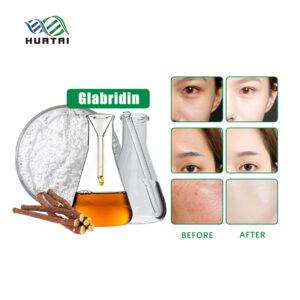
Decoding the IC50: True Melanin Blocking Power
Tyrosinase drives melanin production. We measure how well an ingredient blocks this enzyme using the IC50 value (half-maximal inhibitory concentration). Lower numbers dictate stronger blocking power. Marketing sheets inflate these numbers constantly. Let’s rely on standard in-vitro mushroom tyrosinase assays.
Pure glabridin outclasses traditional agents significantly. You do not need to overload your formula. Massive input percentages just waste budget and invite skin irritation. A functional dose sits between 0.05% and 0.2%.
| Active Compound | IC50 Value (µg/mL) | Relative Strength | Oxidation Risk |
|---|---|---|---|
| Glabridin (90% Grade) | 0.45 – 1.5 | Extreme (10x+ baseline) | Moderate |
| Kojic Acid | 10.0 – 14.0 | Baseline (1x) | High |
| Alpha-Arbutin | 50.0 – 65.0 | Low | Low |
Reading the COA: Mixtures vs. Pure Molecules
Does your supplier assign a sharp melting point to a 40% extract? That is scientifically impossible. The 40% grade is a botanical mixture of flavonoids. Mixtures soften over a broad range. Only highly purified molecules (like the 90% or 98% grades) possess a true, sharp melting point.
Select the 40% grade for dark serums or body lotions where a yellow tint is acceptable. If you are formulating a transparent toner or a premium white emulsion, the 90% grade is strictly mandatory to prevent aesthetic shifts.
| Specification Parameter | 40% Standard Grade | 90% Purified Grade |
|---|---|---|
| Visual Appearance | Brown to brownish-yellow | Pale yellow to off-white |
| Melting Point | N/A (Complex mixture) | 156°C – 158°C |
| Water Solubility | Insoluble | Insoluble |
The Solubility Trap: Why Formulas Fail
This ingredient hates water. It is intensely lipophilic. Dumping it directly into the aqueous phase guarantees failure. It will float, clump, and eventually precipitate. Heating it aggressively in a volatile solvent is just as bad. The solvent evaporates, leaving the active with nowhere to go. It crashes out and crystallizes.
Correct Compounding Protocol
- Carrier Selection: Avoid ethanol. Utilize Butylene Glycol (1,3-BG), Propylene Glycol, or PEG-400.
- Heat Control: Warm the solvent to 40°C – 50°C. Stir until completely clear. High heat triggers flavonoid oxidation.
- Integration Phase: Introduce the premix during the final cool-down step (below 40°C).
- pH Buffering: Lock the final emulsion pH between 4.5 and 6.5. Alkaline environments shatter the molecular structure.
Factory Case Study: The Pinkish-Brown Lotion
A contract manufacturer recently watched a 500-kilo batch of brightening lotion fail at week four. The liquid turned pinkish-brown. Crystals jammed the pump mechanisms. We audited their SOPs immediately.
They made two critical errors. First, they dissolved the active in minimal ethanol at 60°C. Second, they dumped it into a highly acidic base (pH 3.5) saturated with pure ascorbic acid. We engineered a rapid fix. We replaced the ethanol with PEG-400. We dropped the dissolving heat to 45°C. Finally, we buffered the system to pH 5.5 and replaced the volatile ascorbic acid with Ascorbyl Glucoside. The next pilot batch cleared a 12-week accelerated test at 45°C with zero degradation.
Industry Compliance and Formulation Future
Regulatory authorities are suffocating synthetic bleaching agents. Hydroquinone bans are strictly enforced across Europe, the UK, and major Asian markets. Brands demand heavy-hitting botanical alternatives.
Plant-derived tyrosinase inhibitors dominate this space because they offer dual functionality. They stop melanin synthesis. They also suppress UVB-induced inflammation by downgrading COX-2 expression. You shut down the biological trigger before it forces melanocytes to react. Build your chassis around solid chemistry. Respect the solubility boundaries. The clinical efficacy will naturally follow.
Public Scientific References & Literature
- Yokota, T., et al. (1998). “The inhibitory effect of glabridin from licorice extracts on melanogenesis and inflammation.” Pigment Cell Research, 11(6), 355-361.
- Nerya, O., et al. (2003). “Glabrene and isoliquiritigenin as tyrosinase inhibitors from licorice roots.” Journal of Agricultural and Food Chemistry, 51(5), 1201-1207.
- Simmler, C., et al. (2013). “Licorice roots: A versatile botanical dietary supplement.” Fitoterapia, 90, 106-121.
- D’Mello, S. A., et al. (2016). “Signaling Pathways in Melanogenesis.” International Journal of Molecular Sciences, 17(7), 1144.
 English
 German
 Spanish
 French
 Japanese
 Korean