Why do so many botanical brightening serums fail stability testing at week four?
Formulators often blame the emulsifier. The reality usually points to poorly integrated active ingredients. We need to look at the physical chemistry of raw materials before they enter the mixing vessel.
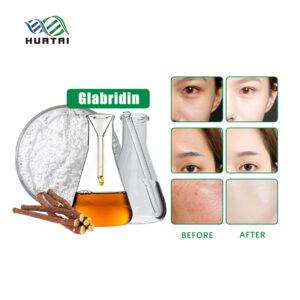
Glabridin, a primary flavonoid extracted from Glycyrrhiza glabra (licorice root), is a perfect case study. As a manufacturer of cosmetic active ingredients at Shaanxi Huatai, we routinely audit failed prototypes. The failures rarely stem from the extract’s biological efficacy. They stem from a misunderstanding of its physical parameters. Here is the objective data you need to formulate correctly.
1. The Physics of Solubility and Crystallization
Many formulators experience crystallization when working with pure plant extracts. Glabridin is highly lipophilic. It repels water. Dropping standard raw powder directly into an aqueous phase guarantees clumping and eventual precipitation.
The industry often pushes patented, heavily modified, or encapsulated versions of Glabridin to solve this. These water-soluble modifications do work. However, they drastically increase your raw material costs. Are they strictly necessary? Rarely.
You can achieve perfect stability with standard powder through rigorous solvent management. Glabridin requires pre-dissolution. You must disperse the powder in a compatible solvent—such as Ethoxydiglycol, Propylene Glycol, or Butylene Glycol—and apply moderate heat. Heating the solvent phase to 60°C to 70°C ensures complete solubilization. Once dissolved into a clear liquid, this pre-mix must be added to the main emulsion during the final cool-down phase below 45°C.
2. Addressing Color Shifts in Emulsions
We need to be honest about the visual impact of natural actives. Pure extracts carry color.
The 40% Glabridin specification naturally presents as a light brown to yellowish powder. The 90% specification is heavily purified, resulting in an off-white to pale yellow appearance.
If you use the 40% grade at an effective dosage, your final cream or serum will develop a slight cream or ivory tint. This is a physical reality of the flavonoid structure. If a raw material supplier offers a stark white 40% botanical extract, you should request immediate documentation on their bleaching processes or synthetic additives. Accept the natural tint rather than compromising the molecular integrity of the active.
3. Efficacy Data: A Rigorous Look at IC50
How do we measure the brightening capability of this molecule? We rely on IC50 values—the concentration required to inhibit 50% of tyrosinase activity.
In standard mushroom tyrosinase inhibition assays, 90% Glabridin typically demonstrates an IC50 between 0.15 and 1.5 μg/mL. For context, Kojic Acid—a highly reliable and stable industry standard—often registers an IC50 of 10 to 15 μg/mL under identical testing conditions.
We must remain scientifically objective here. Mushroom tyrosinase is an accessible in-vitro testing model, but it does not perfectly replicate human melanocyte behavior. We cannot simply state Glabridin is “100 times better” than other acids based solely on a petri dish. The low IC50 indicates high molecular efficiency, but actual efficacy depends entirely on your formula’s delivery system penetrating the stratum corneum.
4. Manufacturing Specifications and COA
Accurate product data is non-negotiable. Below are the verified parameters we utilize for batch release.
| Specification Parameter | 40% Grade | 90% Grade | Testing Method |
|---|---|---|---|
| Appearance | Light yellow to brown powder | Off-white to pale yellow powder | Visual |
| Assay Content | ≥ 40.0% | ≥ 90.0% | HPLC |
| Loss on Drying | ≤ 5.0% | ≤ 5.0% | 105°C, 2 hrs |
| Ash Content | ≤ 1.0% | ≤ 0.5% | Ignition |
| Heavy Metals | ≤ 10 ppm | ≤ 10 ppm | AAS / ICP-MS |
| Total Plate Count | ≤ 1000 cfu/g | ≤ 1000 cfu/g | AOAC |
5. A Real-World Formulation Case
A client recently submitted a 0.5% brightening cream prototype for troubleshooting. After three weeks in a 45°C accelerated stability chamber, the cream developed distinct yellow bands and minor phase separation.
The issue was not the emulsifier. The problem was lipid oxidation accelerated by an unbuffered pH environment. Glabridin requires a specific pH window to remain structurally sound.
We adjusted the final formula pH to a stable range of 5.5 to 6.2. We also introduced 0.1% Tocopherol into the oil phase to act as a sacrificial antioxidant. The yellow banding completely stopped in subsequent stability trials.
Standard Dosage Guidelines:
- 40% Grade: 0.05% to 0.2%
- 90% Grade: 0.01% to 0.05%
Pushing concentrations beyond these limits rarely yields better clinical results and only increases the risk of skin sensitization.
6. Formulator FAQ for Glabridin
When procurement teams and chemists source this material, these are the exact questions we answer:
-
What is the precise solubility profile of standard Glabridin?
It is highly soluble in ethanol, propylene glycol, butylene glycol, and ethoxydiglycol when heated to 60°C. It is practically insoluble in water and glycerin. -
Can you provide testing samples before bulk orders?
Yes. We supply standardized samples specifically for R&D benchwork, stability testing, and preliminary pilot batches. -
Is HPLC chromatogram data provided with each batch?
Yes. A complete Certificate of Analysis (COA) along with the specific batch HPLC chromatogram is standard documentation. -
How do I prevent the active from crystallizing in a high-water serum?
You must completely pre-dissolve the powder in a glycol solvent under moderate heat. Only introduce this clear pre-mix into the main water phase once the batch has cooled below 45°C with high-shear mixing. -
Will the 40% specification permanently dye a white emulsion?
It will not dye the skin, but it will shift a pure white cosmetic base to a very pale yellow or cream color. -
What is the standard lead time for commercial volumes?
Standard inventory specifications usually require 3 to 5 business days for processing and dispatch. -
How do you control agricultural heavy metal contamination?
Licorice roots naturally absorb trace minerals from the soil. We implement strict extraction protocols and utilize ICP-MS testing to ensure heavy metals remain strictly below 10 ppm, complying with global cosmetic regulations. -
Do I absolutely need to buy the expensive liposomal version?
No. If your chemists understand how to design an efficient solvent system within the formula, standard raw powder offers excellent bioavailability at a fraction of the cost.
References:
- Simmler, C., et al. (2013). “Phytochemical and Biological Properties of Glabridin.” Fitoterapia, 90, 160-184.
- Yokota, T., et al. (1998). “The inhibitory effect of glabridin from licorice extracts on melanogenesis and inflammation.” Pigment Cell Research, 11(6), 355-361.
- Draelos, Z. D. (2007). “Skin lightening preparations and the hydroquinone controversy.” Dermatologic Therapy, 20(5), 308-313.
 English
 German
 Spanish
 French
 Japanese
 Korean