
Dermal matrix reconstruction is not guesswork. It relies on specific biochemical pathways. You introduce an active molecule. The skin reacts. Bakuchiol mimics retinol. PDRN regenerates tissue via adenosine receptors. Two divergent mechanisms. Evaluating their physicochemical properties side-by-side reveals the real formulation constraints. Let’s look at the hard data.
Pathway Activation & Clinical Realities
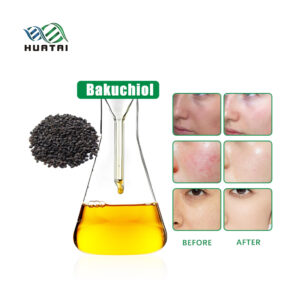
Why choose one over the other? Mechanism dictates application. Bakuchiol targets structural degradation in the dermal-epidermal junction. It upregulates retinol-induced gene targets like CRBP-1 and RARE. It does this without touching retinoic acid receptors. You bypass the typical retinoid inflammatory cascade. Clinical profiling demonstrates that a 0.5% Bakuchiol emulsion reduces wrinkle depth by 20.5% and decreases hyperpigmentation intensity by 59% over 12 weeks of twice-daily application.[British Journal of Dermatology: Assessment of skin-aging properties of bakuchiol – https://onlinelibrary.wiley.com/doi/abs/10.1111/bjd.16918]
PDRN works differently. It operates via the salvage pathway. It provides specific nucleotide precursors for DNA synthesis. It binds selectively to the adenosine A2A receptor. This binding triggers Vascular Endothelial Growth Factor (VEGF) release. Fibroblast proliferation spikes. In vitro cell viability assays demonstrate that 100 μg/mL PDRN increases human dermal fibroblast viability by 32% within 48 hours compared to control groups.[International Journal of Molecular Sciences: Polydeoxyribonucleotide (PDRN) Promotes Wound Healing – https://www.mdpi.com/1422-0067/17/3/350] It accelerates wound healing. It thickens the dermis. This is fundamental tissue repair, not just surface refinement.
Specification Parameters & COA Benchmarks
Quality control demands ruthless analytical testing. Premium-grade raw materials must hit these baselines. Accept no compromises here.
| Test Item | Bakuchiol Parameter | PDRN (Polydeoxyribonucleotide) | Test Method / Remarks |
|---|---|---|---|
| Appearance | Yellow to brownish viscous liquid | White to off-white lyophilized powder | Visual Inspection |
| Purity/Assay | ≥ 99.0% | ≥ 95.0% (DNA content) | HPLC / UV Spectrophotometry |
| Molecular Weight | 256.38 g/mol | 50 kDa – 1500 kDa (Polymeric) | Gel Permeation Chromatography |
| Solubility | Highly oil-soluble, water-insoluble | Highly water-soluble, lipid-insoluble | USP standard |
| Psoralen Content | < 1 ppm | N/A | Crucial for photo-safety |
Formulation Constraints: The Lab Reality
Integrating these actives is inherently difficult. The manufacturing environment must be strictly controlled.
Bakuchiol hates light. It degrades easily. Transition metals cause rapid oxidation. Formulators must use potent iron chelators. Think Disodium EDTA at 0.05-0.1%. Pair this with a robust lipid-soluble antioxidant system like Tocopherol. Bakuchiol goes into the oil phase. Drop it in below 40°C during cool-down. Excessive heat will destroy the active molecule. Keep the final formula pH strictly between 4.0 and 5.5.
What about PDRN? It is a biopolymer. Rheology is your biggest hurdle. Do not use high shear mixing. Homogenization above 3000 RPM will physically shear the DNA fragments. You degrade the molecular weight. You lose receptor affinity. Mix it into the water phase at ambient temperature. Keep the pH above 5.5. Acidic environments cause DNA depurination. Structure collapse follows. Also, keep it away from strong cationic polymers. The negatively charged polynucleotide chains will precipitate instantly.
Synergistic Matrices: Current Formulation Trends
Single-ingredient formulas are rapidly fading. The global market demands hybrid repair-and-stimulate matrices.
Matrix A: Botanical Retinoid + Barrier Defense
Combine Bakuchiol (0.5-1.0%) with Dipotassium Glycyrrhizate (0.1-0.2%) and pure Squalane. This W/O emulsion targets structural photoaging. It simultaneously suppresses baseline erythema. Dipotassium Glycyrrhizate inhibits hyaluronidase. It downregulates pro-inflammatory cytokines. This synergy optimizes Bakuchiol’s tolerability for highly sensitized, rosacea-prone skin profiles.
Matrix B: Biomimetic Tissue Regeneration
Post-procedure care needs absolute speed. Pair PDRN (0.5-1.0%) with Asiaticoside (0.3%) in a Hydrolyzed Sodium Hyaluronate base. This hydrogel targets rapid barrier recovery after ablative lasers or micro-needling. PDRN provides VEGF angiogenic stimulation. Centella isolates prompt rapid collagen synthesis.
Regulatory & Compliance Status
Global compliance focuses heavily on trace contaminants. Bakuchiol is extracted from Psoralea corylifolia. This naturally risks co-extracting photo-toxic psoralens. High-grade material must certify psoralen levels below 1 ppm. This is mandatory to meet EU daytime cosmetic safety margins. Cosmetic grade PDRN comes from salmon milt. Rigorous viral clearance testing is non-negotiable. Comprehensive protein residue removal is required to mitigate allergic responses. Both are necessary to clear strict EU REACH raw material safety assessments.
B2B Sourcing FAQ: 8 High-Frequency Formulation Queries
- What drives the standard wholesale price variance between 99% purity Bakuchiol and cosmetic-grade PDRN bulk powder?
Pricing reflects extraction complexity; Bakuchiol requires high-performance liquid chromatography (HPLC) purification, while PDRN demands expensive enzymatic cleavage and viral clearance. - How can our internal QC lab verify plant-derived Bakuchiol purity to confidently rule out synthetic adulteration?
Utilize C14 radiocarbon dating to confirm biological origin, combined with HPLC to check for synthetic solvent residues. - Can water-soluble PDRN be successfully suspended in anhydrous oil serums?
Yes, but it requires advanced liposomal encapsulation or specific micro-emulsion technology to prevent phase separation. - What is the recommended minimum active dosage for testing PDRN tissue regeneration efficacy?
Clinical baselines suggest starting at 0.5% for daily-use cosmetics and up to 2.0% for professional post-laser care hydrogels. - Does high-molecular-weight cosmetic PDRN demand specialized cold-chain logistics during shipping?
Lyophilized powder is stable at room temperature, but prolonged exposure above 45°C during sea freight can cause structural degradation. - How do formulators resolve the gradual yellowing issue of Bakuchiol in high-water content lotions?
Implement a dual antioxidant strategy (e.g., 0.1% BHT + 0.2% Vitamin E) and strictly package in opaque, airless pump bottles. - Are there specific regulatory hurdles for importing salmon-derived PDRN into the European Union?
It must pass strict TSE/BSE-free certification and allergen profiling (specifically for fish proteins) under EU cosmetic regulations. - Which third-party analytical methods are considered industry standard for quantifying PDRN fragment sizes?
Gel Permeation Chromatography (GPC) paired with Multi-Angle Light Scattering (MALS) provides the most accurate molecular weight distribution profile.
 English
 German
 Spanish
 French
 Japanese
 Korean