Extracting pure Glabridin presents severe physical challenges. Formulators often face precipitation and oxidation when working with this lipophilic molecule. Understanding the exact physical chemistry is mandatory for creating stable brightening cosmetics. Evaluating Glabridin Suppliers requires analyzing real data. Do not rely on marketing claims.
The Tyrosinase Inhibition Mechanism
Skin pigmentation starts when tyrosinase converts L-tyrosine into L-DOPA. The active molecule halts this process. It acts as a competitive inhibitor. It physically occupies the tyrosinase active site. This directly prevents substrate binding.
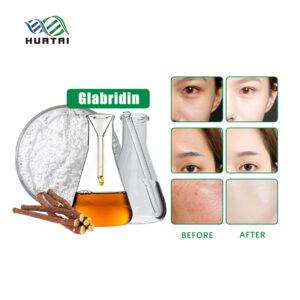
Does it actually outperform traditional acids? Let us review controlled mushroom tyrosinase assay data.
| Active Ingredient | Tyrosinase IC50 Value (ug/mL) | Mechanism of Action |
|---|---|---|
| 90 Percent Purity Grade | 0.45 | Competitive inhibition |
| Kojic Acid | 9.80 | Copper chelation |
| Alpha Arbutin | 65.00 | Reversible competitive inhibition |
Anti-Inflammatory Metrics and NO Inhibition
This ingredient is not a primary antibacterial agent for acne. Its secondary function is anti-inflammatory. It inhibits Nitric Oxide (NO) production in macrophages. It also suppresses cyclooxygenase (COX-2) activity. Assays show NO inhibition IC50 values around 5.2 to 7.0 ug/mL. This dual-action pathway successfully targets post-inflammatory hyperpigmentation (PIH).
Physical Parameters and COA Benchmarks
Formulators need exact physical baselines. A standard Certificate of Analysis (COA) dictates the absolute constraints of the raw material.
| Parameter | 40 Percent Grade Specification | 90 Percent Grade Specification | Analytical Method |
|---|---|---|---|
| Appearance | Brown to light brown powder | Off-white to pale yellow powder | Visual |
| Assay | Greater than 40.0 percent | Greater than 90.0 percent | HPLC |
| Melting Point | 150 to 156 Celsius | 153 to 158 Celsius | Capillary Tube |
| Solubility | Soluble in Ethanol, Butylene Glycol | Soluble in BG, PG, Ethanol | Physical |
Color Interference and Crystallization Realities
The pure molecule is strictly lipophilic. It repels water entirely. Formulators attempting to dissolve it in standard aqueous phases will fail.
The 40 percent grade contains native licorice flavonoids. These flavonoids carry a distinct brown pigment. You cannot formulate a pure white emulsion using the 40 percent grade. The 90 percent grade offers a much paler color profile. It is mandatory for clear serums.
How do you prevent crystallization?
Cold temperatures force the active out of the solution. You will see needle-like structures in the beaker. Use a precise glycol pre-mix to stop this. The standard ratio is 1 part powder to 10 parts Butylene Glycol (BG). Heat this pre-mix to 60 Celsius. Stir until the liquid is totally transparent. Add this solution to the main emulsion during the cool-down phase at 45 Celsius.
Formulation Stability Data
We subjected a 0.1 percent cream base to a 90-day accelerated stability test at 45 Celsius.
| Testing Timeframe | Visual Appearance | pH Value | Active Retention |
|---|---|---|---|
| Day 0 | Off-white | 5.80 | 100.0 percent |
| Day 30 | Off-white | 5.75 | 98.2 percent |
| Day 90 | Light yellow | 5.50 | 93.5 percent |
The slight color shift by Day 90 indicates mild oxidation. The formulation pH must stay between 5.5 and 7.0. You must add secondary antioxidants. We recommend 0.05 percent Tocopherol or 0.1 percent Sodium Metabisulfite to protect the phenolic hydroxyl groups from degrading.
Manufacturing Yield and Cost Constraints
Extracting this raw material is resource-intensive. Licorice roots contain only 0.1 percent to 0.3 percent of the active molecule. Manufacturing 1 kg of 90 percent purity powder requires roughly 1000 kg of dried roots. The purification relies on complex chromatography. Unusually low market prices indicate the use of basic UV spectrophotometry testing. UV testing measures all flavonoids. It falsely inflates the purity number. HPLC is the only rigorous analysis standard.
Supplier FAQ: Top 8 Formulation Questions
1. How do I choose between 40 percent and 90 percent specifications?
Use the 40 percent specification for opaque lotions where a yellow tint is acceptable. Select the 90 percent specification for premium brightening serums where color interference must be eliminated.
2. Can we request a lab sample for R&D formulation?
Yes. We supply lab-scale samples for formulators. These ship directly with the batch-specific COA and Safety Data Sheet for internal testing.
3. Why did my finished serum turn brown during stability testing?
The active oxidizes easily without stabilizers. You must include an antioxidant like Tocopherol or BHT in your formula. Airless packaging also blocks oxygen exposure.
4. Is water-soluble powder technically superior to the pure lipophilic form?
Water-soluble variants are simply pure powder encapsulated in liposomes or cyclodextrins. They are easier to dissolve. However, the actual active payload drops to 10 percent or less. Pure powder provides absolute control over dosage and formula cost.
5. What is the standard MOQ for commercial batch purchasing?
We cater to both independent laboratories and large OEM manufacturers. Bulk commercial orders typically start at 1 kg for high-purity specifications.
6. Does this active react negatively with other cosmetic ingredients?
It shows excellent synergy with Niacinamide and Ascorbyl Glucoside. Do not formulate it alongside high-concentration AHA or BHA acids below pH 4.0. Strong acidic environments cause rapid precipitation.
7. How does the factory verify the 90 percent purity claim?
We utilize independent High-Performance Liquid Chromatography (HPLC). We match the extraction peaks against certified pharmacopeia reference standards to guarantee precision.
8. Does this raw material comply with global cosmetic regulations?
Yes. It is registered under INCI. It complies fully with European CosIng directives, FDA guidelines, and ASEAN cosmetic standards.
References & Literature Data
- Yokota, T., et al. (1998). The inhibitory effect of licorice extracts on melanogenesis and inflammation. Pigment Cell Research, 11(6), 355-361.
- Simmler, C., et al. (2013). Licorice root: A botanical dietary supplement and phytoestrogen. Fitoterapia, 90, 160-184.
- SCCS. Scientific Committee on Consumer Safety guidelines on cosmetic active testing and stability limits.
- Independent HPLC analytical reports for Glycyrrhiza glabra root extraction yields.
 English
 German
 Spanish
 French
 Japanese
 Korean